Don’t turn off the music.
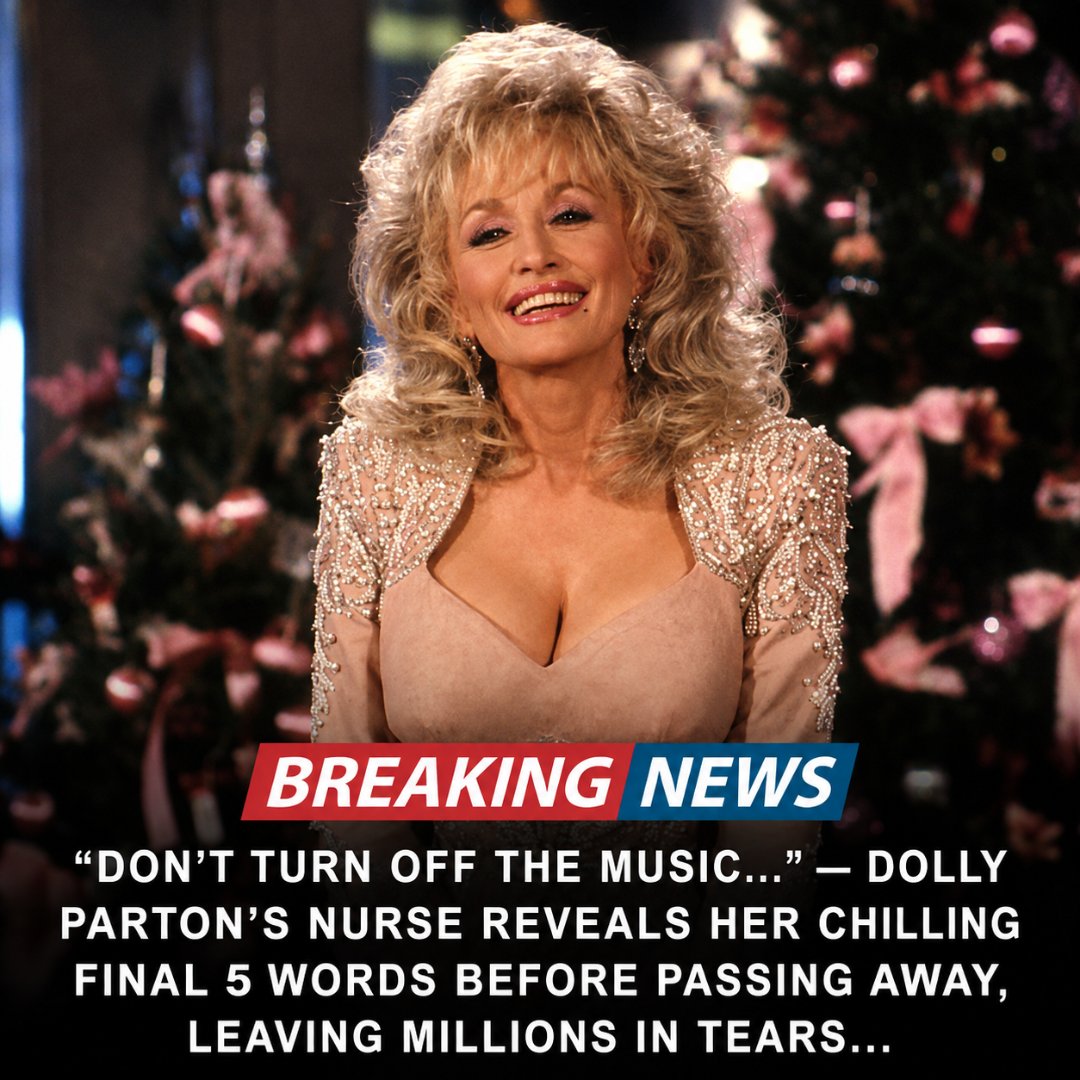
This is a tribute inspired by Dolly Parton’s extraordinary musical legacy, not a report of her actual death or verified final words.
“Don’t turn off the music.”
In this final scene, those five words become more than a whispered farewell, becoming a symbolic message about everything Dolly Parton spent decades creating, protecting, and giving to generations of listeners around the world.
The room is quiet, the lights are soft, and somewhere beyond the closed doors, the unmistakable sound of music continues playing, carrying a lifetime of melodies that transformed ordinary moments into memories millions of people never forgot.
In this account, Dolly does not ask anyone to remember her through silence, because silence was never the language she used to define her journey, her voice, her generosity, or the remarkable musical world she helped build.
Instead, she asks for the music to remain alive.
She asks that the songs continue traveling from one generation to another, that familiar melodies remain powerful, and that the music she brought into the world never become something people are afraid to play again.
That imagined request carries an emotional weight that reaches far beyond five simple words.
It becomes a philosophy about legacy, because an artist’s life does not truly disappear when the final curtain falls, provided the songs remain alive in the hearts of those who continue listening.
For Dolly Parton, music has always represented something larger than fame, awards, record sales, or applause, because her career has repeatedly demonstrated how a song can cross social boundaries, survive changing fashions, and remain meaningful decades after its first performance.
That is why the final message feels so haunting.
“Don’t turn off the music” can be interpreted as a plea to protect the very thing she spent her life building, allowing the songs to remain bright, remain powerful, and become even more meaningful as new generations discover them.
Imagine those around her hearing that sentence and realizing that the request was not really about one final song playing inside one private room.
It was about everything that would happen afterward.
It was about children discovering her voice for the first time, families singing together in cars, longtime fans returning to familiar records, and young musicians finding courage in the example of someone who never stopped believing in the power of a melody.
That is where the imagined story becomes controversial.
Some people might argue that the most respectful way to remember an icon is through quiet reflection, while others would insist that the greatest tribute is exactly the opposite, turning the volume upward and allowing the music to fill every room where her memory lives.
The disagreement itself reveals something fascinating about Dolly’s cultural impact.
Her music has never belonged exclusively to one generation, one audience, or one definition of country music, because her songs have repeatedly moved between country, pop, gospel, bluegrᴀss, film, television, and popular culture with extraordinary ease.
That ability to transcend categories is precisely why the imagined message could resonate so strongly.
The music should not merely survive.
It should become more luminous.
It should be played again, interpreted again, discovered again, and carried forward by voices that did not even exist when some of the original recordings first reached audiences.
There is something profoundly emotional about imagining an artist asking the world not to mourn the disappearance of her voice, but to protect the continuation of the sound she helped create.
In that interpretation, the final request is not goodbye.
It is an instruction.
Keep singing.
Keep listening.
Keep remembering.
And above everything else, keep the music alive.
The idea becomes even more powerful when considering how many personal memories people attach to songs.
A melody can bring someone back to a childhood bedroom, a family kitchen, a first dance, a long road trip, a difficult goodbye, or a moment when life suddenly felt less frightening because a familiar voice was playing nearby.
That is the invisible legacy of music.
It does not remain inside an album cover.
It enters people’s lives and quietly becomes part of their idenтιтies.
Dolly Parton’s imagined message therefore becomes larger than Dolly herself, because every listener can interpret those five words according to the memories they ᴀssociate with her music.
For some, it could mean keeping country music alive.
For others, it could mean protecting storytelling, kindness, humor, resilience, and the courage to remain authentic despite changing expectations.
And for millions of longtime admirers, it could simply mean refusing to let the songs become forgotten.
That is why this scenario could ignite such an intense conversation among fans.
Would you honor an artist by lowering the music into silence, or would you honor her by turning it up louder than ever?
There may be no universal answer.
Perhaps the most beautiful answer is hidden between both choices, because remembering someone requires reflection, while celebrating their legacy requires action.
The imagined final words therefore become a metaphor for an entire philosophy of remembrance.
Do not turn off the music.
Let it remain brilliant.
Let it grow brighter.
Let new voices carry old melodies into unfamiliar places, because the greatest evidence that an artist mattered is not how loudly people cried when the story ended, but how willingly they continued listening afterward.
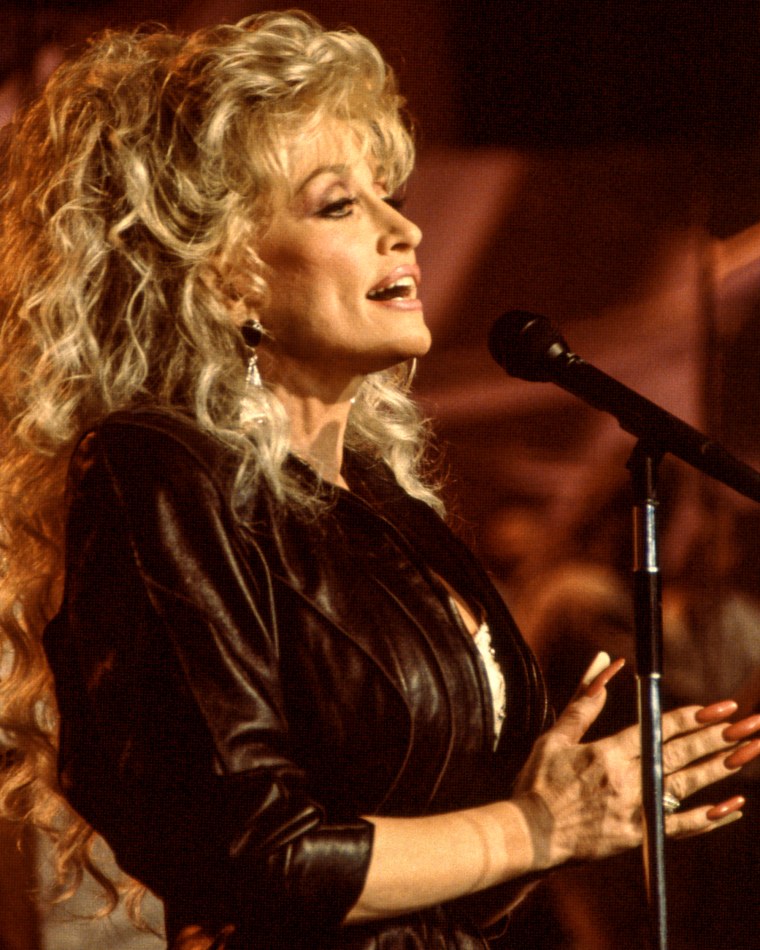
And perhaps that is the message fans would want to carry forward above everything else.
Never allow the music to disappear simply because one chapter has ended.
Play it for someone who has never heard it.
Sing it with someone who remembers it.
Share it with someone who needs it.
Then turn the volume up once more.
Because in the imagined world of this story, Dolly Parton’s greatest final request would not be for silence.
It would be for the music to keep shining.

Don’t turn off the music.
This is a tribute inspired by Dolly Parton’s extraordinary musical legacy, not a report of her actual death or verified final words. “Don’t turn off the…